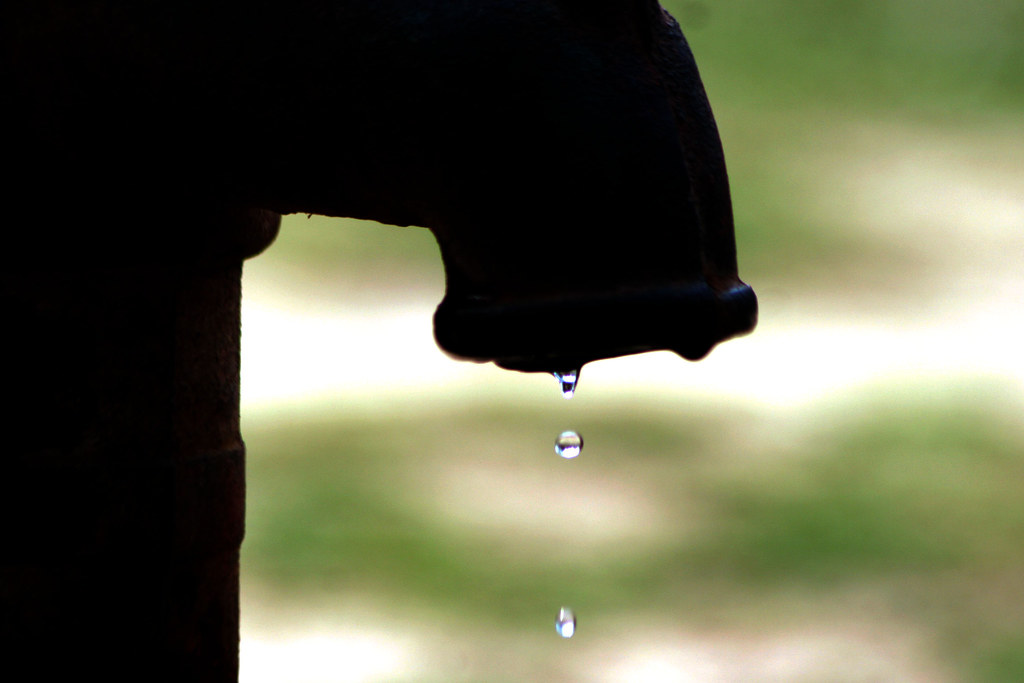
Distraught people from the affluent suburbs desperately line up to collect their daily allotment of water. One man shoves his way through the crowd with buckets in both hands, and begs an officer for an extra liter of water for his ill family. But the city cannot afford to spare any water. This dire situation could become a reality in Cape Town, South Africa, as the worst drought recorded in its history continues to burden its people (Welch).
For three consecutive years, the drought in Cape Town has been in a critical condition, caused by rapid population growth and climate change. The drought has been further complicated by the national government’s lack of aid (Welch). Cape Town’s local government is run by the Democratic Alliance, the opposition party of the nationally run African National Congress (ANC) (Olivier). The local government attempted to implement a water management strategy in the early stages of the drought, but the ANC did not give Cape Town the necessary funds to put these plans into action due to political tensions between the two parties (Olivier).
The drought is bringing substantial change to Cape Town, one of the wealthiest cities on the continent of Africa (Welch). It may become the first major city to run out of water for its 4 million inhabitants (Joseph). The reservoirs, which hold up to 230 billion gallons of water, are currently at a low 26% capacity (Welch). The drought is greatly impacting the people in Cape Town, through both the current water limitations and potential future implications of a planned “Day Zero,” when all taps would be shut off.
The recent water usage restrictions imposed on the people have drastically altered the daily routines of those living in Cape Town. The local authorities have limited daily water to 50 liters (13.2 gallons) per person, which is used for drinking, bathing, washing clothes and dishes, brushing teeth, flushing toilets, and cooking (Joseph). To put this into perspective, the average American uses 80-100 gallons of water per day (Joseph). These changes have introduced new standards into society, such as the obligatory collection of grey water, flushing both private and public toilets only when necessary, showering or washing clothes rarely, and using hand-sanitizer as an alternative to washing hands, which are bound to bring about unsanitary conditions for all (Kane).
If the drought continues, the city will reach an emergency state called Day Zero, which would cause even further complications for the people. At this time, currently projected for mid-July, the city would block all water access to the households and businesses of the people (Welch). Instead, the people would need to go to one of 200 water stations, guarded by armed officers, to collect their 25 liter (6.6 gallon) ration of water (Welch). This amount is typically used in less than four minutes of showering (Welch). Day Zero would be especially difficult for the poor people in Cape Town, who would need further government assistance to stay alive (Lyster). The low water allotments would also cause poor sanitation in homes, subsequently causing much of the population to become sick (Lyster).
Despite these changes, the recent efforts to save water have positively influenced the mindsets of the people of Cape Town. They are working together to develop innovative solutions to the problem (Dowling). This collaboration establishes a stronger sense of community. There is also an increased awareness of the limited resources on Earth: water is no longer viewed as an entitlement (Kane). Just as the people of Cape Town have a greater appreciation for their water supply, we must all learn to value our resources and work collectively to preserve them.
For three consecutive years, the drought in Cape Town has been in a critical condition, caused by rapid population growth and climate change. The drought has been further complicated by the national government’s lack of aid (Welch). Cape Town’s local government is run by the Democratic Alliance, the opposition party of the nationally run African National Congress (ANC) (Olivier). The local government attempted to implement a water management strategy in the early stages of the drought, but the ANC did not give Cape Town the necessary funds to put these plans into action due to political tensions between the two parties (Olivier).
The drought is bringing substantial change to Cape Town, one of the wealthiest cities on the continent of Africa (Welch). It may become the first major city to run out of water for its 4 million inhabitants (Joseph). The reservoirs, which hold up to 230 billion gallons of water, are currently at a low 26% capacity (Welch). The drought is greatly impacting the people in Cape Town, through both the current water limitations and potential future implications of a planned “Day Zero,” when all taps would be shut off.
The recent water usage restrictions imposed on the people have drastically altered the daily routines of those living in Cape Town. The local authorities have limited daily water to 50 liters (13.2 gallons) per person, which is used for drinking, bathing, washing clothes and dishes, brushing teeth, flushing toilets, and cooking (Joseph). To put this into perspective, the average American uses 80-100 gallons of water per day (Joseph). These changes have introduced new standards into society, such as the obligatory collection of grey water, flushing both private and public toilets only when necessary, showering or washing clothes rarely, and using hand-sanitizer as an alternative to washing hands, which are bound to bring about unsanitary conditions for all (Kane).
If the drought continues, the city will reach an emergency state called Day Zero, which would cause even further complications for the people. At this time, currently projected for mid-July, the city would block all water access to the households and businesses of the people (Welch). Instead, the people would need to go to one of 200 water stations, guarded by armed officers, to collect their 25 liter (6.6 gallon) ration of water (Welch). This amount is typically used in less than four minutes of showering (Welch). Day Zero would be especially difficult for the poor people in Cape Town, who would need further government assistance to stay alive (Lyster). The low water allotments would also cause poor sanitation in homes, subsequently causing much of the population to become sick (Lyster).
Despite these changes, the recent efforts to save water have positively influenced the mindsets of the people of Cape Town. They are working together to develop innovative solutions to the problem (Dowling). This collaboration establishes a stronger sense of community. There is also an increased awareness of the limited resources on Earth: water is no longer viewed as an entitlement (Kane). Just as the people of Cape Town have a greater appreciation for their water supply, we must all learn to value our resources and work collectively to preserve them.
Works Cited:
Dowling, Patrick. “Ten Good Things about Cape Town's Drought.” Times LIVE, Tiso Blackstar
Group, 5 Feb. 2018,
Joseph, Raymond. “In My City of Cape Town, There Is Only One Topic of Conversation:
Water.” CNN, Cable News Network, 14 Feb. 2018,
Kane, Dianna. "Running Dry in Cape Town." New York Times, 2 Feb. 2018, p. A23(L). Global
Issues in Context,
http://link.galegroup.com/apps/doc/A525967595/GIC?u=los42754&xid=5b3088f1. Accessed 6 Mar. 2018.
Lyster, Rosa. “Counting Down to Day Zero in Cape Town.” The New Yorker, The New Yorker, 1
Olivier, David W. "Cape Town's Water Crisis - Driven By Politics More Than Drought
[analysis]." Africa News Service, 15 Dec. 2017. Opposing Viewpoints in Context,
Welch, Craig. “Why Cape Town Is Running Out of Water, and Who's Next.” National
Geographic, National Geographic Society, 5 Feb. 2018,
news.nationalgeographic.com/2018/02/cape-town-running-out-of-water-drought-taps-sh
toff-other-cities/.

One take-away from this article was acknowledging the drought in cape town. I thought we were in a horrible drought, but after reading this paper I'm glad we have water. Hope this problem is fixed soon.
ReplyDeleteI really like the way you use your hook to display a very realistic situation that could become a reality in the future. It really sets up your article nicely and makes me interested in your topic. My main take-away from your piece is how there are the consequences of the drought right now, and then there are the future implications for how Day Zero will affect the people, both of which are extremely dire. One question I have is: where will the water come from when the government has to hand it out?
ReplyDeleteMy topic was also Cape Town's drought. After reading this I learned more about how the intense population growth and climate changes have affected the rapidness of the approaching Day Zero. I wonder why the government has not stepped in further regarding the issue-- the citizens are taking matter into their own hands and I wonder why the government has not helped further.
ReplyDeleteOne think I really liked about your article was your hook. I thought it was a really gripping and interesting way to start your report. My main take-away from your piece is how 4 minutes of shower water for us is equivalent to their daily rations. It made me open my eyes to the severity of the situation. A question that arose for me is how did one of the wealthiest cities in Africa end up in such a terrible situation?
ReplyDelete