The Trapped Young Girls of Africa
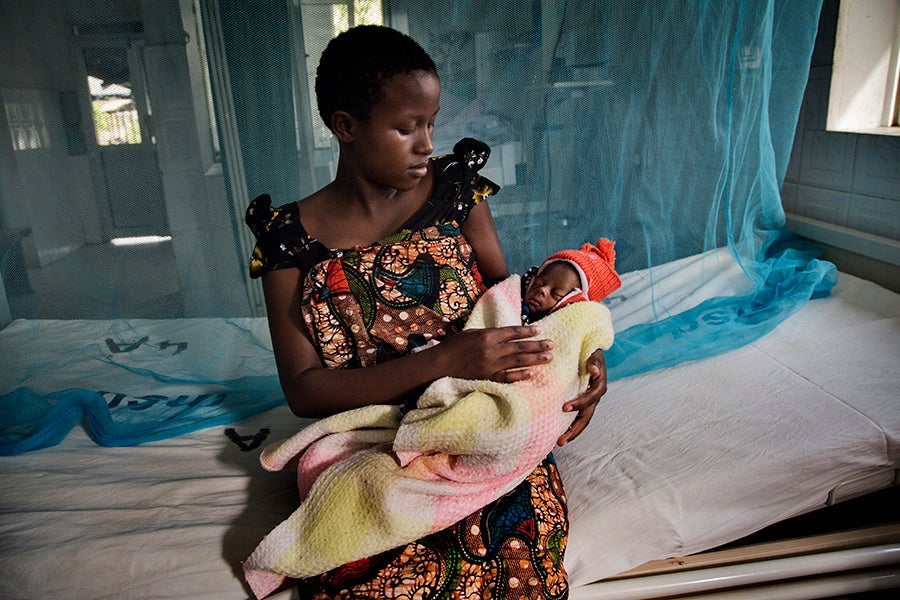 Education. Freedom. Choice. Independence. As citizens of the US, these are privileges that are given to us at birth. But what if you were born without these rights? Unfortunately, in the developing, third-world countries of Africa, this misfortune is a reality. The victims are millions of young girls, who are stripped of their freedoms due to the significant, widely-practiced act of child marriage (“Ending”).
Out of the 20 countries with the highest rates of child marriage in the world, 17 of them are African countries. For instance, the percentage of girls married before 18 is 76 percent in Niger, 70 percent in the Central African Republic and Chad, and in Malawi, 50 percent, which is one for every two girls (Odhiambo). Even tragically, if no significant changes are implemented, the number of child brides is expected to increase by more than double to 310 million by 2050 (Chamberlain).
One of the greatest factors behind the practice of child marriage is poverty. In this case, families are so impoverished that feeding another mouth at the dinner table is almost impossible. Most of the time it is the parents who make the decision to sacrifice a daughter for the sake of the rest of the family.; However, sometimes, it is the girls themselves who bring the idea upon her parents in search of an escape from her unhappy life. (Chamberlain). According to the ICRW, “Girls living in poor households are almost twice as likely to marry before 18 than girls in higher income households. More than half of the girls in Bangladesh, Mali, Mozambique, and Niger are married before age 18. In these same countries, more than 75 percent of people live on less than $2 a day” (“Child”).
But why are only girls the ones being forced into marriages as children? Why are the boys freed from these circumstances? In the patriarchal societies of Africa, the education of boys is valued more significantly than those of girls. As expressed by Mary K. of South Sudan, “My father refused me to go to school. He said it is a waste of money to educate a girl. He said marriage will bring me respect in the community” (“Ending”). Girls are instead seen as trading tools, and sometimes, they are traded at the same price as animals. In some cases, they are even used as exchanges for animals and objects with the traditional practice of dowries in marriage. (LaFraniere). Additionally, religious beliefs, such as the doctrines of the Apostolic faith which state that girls must marry when they are between 12 and 16, further contribute to the continuation of child marriage in Africa (“Ending”).
Due to early marriage and maternal age, many young girls suffer from tremendous health and social risks. Pregnancy and childbirth are among the leading causes of death for adolescent girls (“Child”). Additionally, they are forced to halt or even discontinue their education. As a result, girls receive fewer opportunities and a lowered ability to make their own choices and be independent. (“Ending”). Child marriage also exposes many young girls to domestic violence, marital rape, and emotional abuse. In fact, girls who marry young are significantly more likely to experience spousal abuse than women who marry after 25. (“Ending”) Chanika B. from Malawi expresses the abuse she faced in her marriage, “My husband beat me at least twice a week and he used to force me to have sex with him. Also, I was not allowed to go out of the home” (“Ending”).
One of the greatest factors behind the practice of child marriage is poverty. In this case, families are so impoverished that feeding another mouth at the dinner table is almost impossible. Most of the time it is the parents who make the decision to sacrifice a daughter for the sake of the rest of the family.; However, sometimes, it is the girls themselves who bring the idea upon her parents in search of an escape from her unhappy life. (Chamberlain). According to the ICRW, “Girls living in poor households are almost twice as likely to marry before 18 than girls in higher income households. More than half of the girls in Bangladesh, Mali, Mozambique, and Niger are married before age 18. In these same countries, more than 75 percent of people live on less than $2 a day” (“Child”).
But why are only girls the ones being forced into marriages as children? Why are the boys freed from these circumstances? In the patriarchal societies of Africa, the education of boys is valued more significantly than those of girls. As expressed by Mary K. of South Sudan, “My father refused me to go to school. He said it is a waste of money to educate a girl. He said marriage will bring me respect in the community” (“Ending”). Girls are instead seen as trading tools, and sometimes, they are traded at the same price as animals. In some cases, they are even used as exchanges for animals and objects with the traditional practice of dowries in marriage. (LaFraniere). Additionally, religious beliefs, such as the doctrines of the Apostolic faith which state that girls must marry when they are between 12 and 16, further contribute to the continuation of child marriage in Africa (“Ending”).
Due to early marriage and maternal age, many young girls suffer from tremendous health and social risks. Pregnancy and childbirth are among the leading causes of death for adolescent girls (“Child”). Additionally, they are forced to halt or even discontinue their education. As a result, girls receive fewer opportunities and a lowered ability to make their own choices and be independent. (“Ending”). Child marriage also exposes many young girls to domestic violence, marital rape, and emotional abuse. In fact, girls who marry young are significantly more likely to experience spousal abuse than women who marry after 25. (“Ending”) Chanika B. from Malawi expresses the abuse she faced in her marriage, “My husband beat me at least twice a week and he used to force me to have sex with him. Also, I was not allowed to go out of the home” (“Ending”).
The issue of child marriage has been tackled by many African leaders. In fact, at the 28th African Union Summit, leaders vowed to hold an AU campaign to end child marriage. Steps have already been enacted included implementing laws that set the minimum marriage age at 18 and put in place comprehensive and well-financed national plans of action (Odhiambo). Tackling child marriage will, as a result, significantly advance women’s rights and empowerment in health, education, work, freedom from violence, participation in public life, and many other aspects (“Ending”).
Works Cited:
Chamberlain, Gethin. “Why Climate Change Is Creating a New Generation of Child
Brides.” The Guardian, Guardian News and Media, 26 Nov. 2017.
“Child Marriage Facts and Figures.” International Center for Research on Women (ICRW), 31
March 2011.
“Ending Child Marriage in Africa.” Human Rights Watch, Human Rights Watch, 22 Feb.
2017.
Harlan, Becky. “These Girls Escaped Child Marriage. Now They're Raising Their
Voices-and Cameras.” National Geographic, 21 Dec. 2017.
LaFraniere, Sharon. “Forced to Marry Before Puberty, African Girls Pay Lasting Price.” The
New York Times, The New York Times, 27 Nov. 2015.
Odhiambo, Agnes. “Scourge of Child Marriage in Africa Continues.” Human Rights Watch,
Human Rights Watch, 1 Feb. 2017.

1. I appreciated the depth at which you looked into the causes and affects of this problem. It gave a nice insight into the entirety of the issue and how African culture perpetrates it.
ReplyDelete2. Child marriage is very common in Africa and has increased the amount oppression among young girls. The government is actively taking steps to eliminate this problem, however, it is still a large issue.
3. What is the average age of marriage in men vs. women in these countries?
I really liked your article, especially the introduction where you pulled the reader in with a hypothetical situation. My main takeaway was that millions of young African girls are being forced to marry. Are these women scattered throughout Africa or are they specific to certain countries?
ReplyDelete1. I appreciate the clarity of your writing. It is very organized and easy to tell the point you are getting across.
ReplyDelete2. My main take-away is that child marriage is extremely common in Africa, and because of social norms and gender inequality, the issue continues to be very prominent.
3. How does this issue connect to other notable issues in Africa? For example, does this issue relate to the literacy rates?
Your hook is fantastic Rebecca Pan! I really liked your writing style in the introduction, it really shwooped me in and caught my interest.
ReplyDeleteMy main takeaway from this is probably that young girls are being told that they are worthless to society and then pass this sentiment on to their next-of-kin, which continues the cyclistic phenomenon of child marriage.