South Africa, Seared
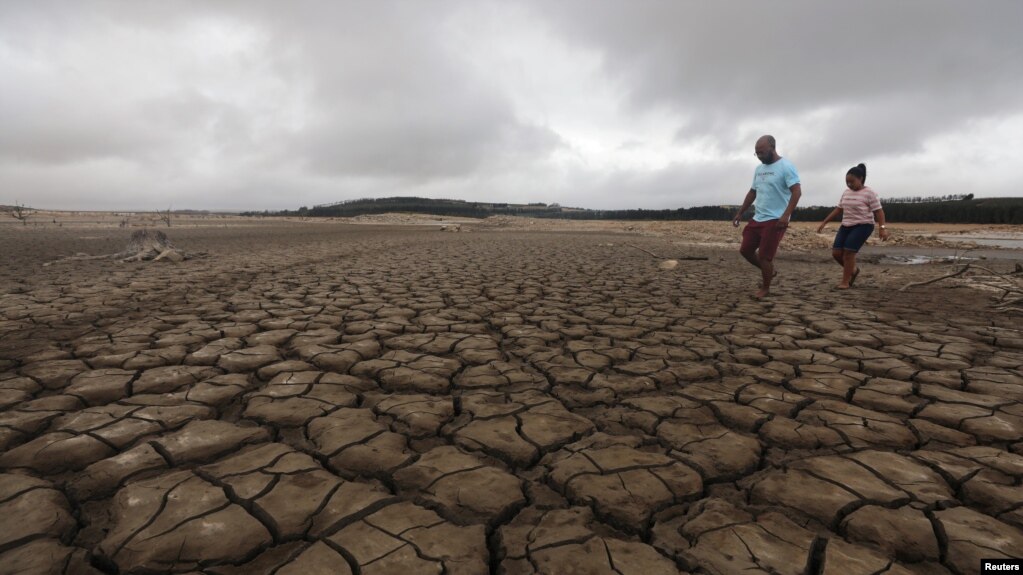
Water: an essential part of the human body, and of human life. But for one city, it is almost a rare commodity whose use is heavily monitored by the officials.
That place is Cape Town, full of four million people, and is the first city in danger of running out of water. Ever since drought affected Cape Town, their reservoirs have become dangerously low, to the point where they could be used up within months. In January, that meant that this so-called “Day Zero” was approaching as soon as April. However, the officials planned to save as much water as they possibly could, and implemented a vigorous conservation in all of Cape Town.
In total, residents were limited to an astonishing 13.2 gallons of water a day (Kane); in contrast, an average person in America uses 80 to 100 (Twigg). The government was even prepared to halve that amount if reservoirs did not stop drying up. Showers were cut down to 90 seconds maximum, and that dirty water was used to flush the toilet. In fancy restaurants it was common to be advised to flush the toilet as infrequently as possible (Goering). There was harsh enforcement as well: each neighborhood was displayed showing their water use, and the families who wasted water were fined and scorned by their neighbors (Kane).
These laws, when implemented, brought up the elephant in the room: what would Cape Town do about their tourists? They were used to using however much water they wanted or needed, and they could not be tracked, either. However, 300,000 jobs depend on tourism , and such scares like these have dramatically affected the economy: last year, when an Ebola outbreak occurred, more than a fifth of would-be travelers canceled their plans. Therefore, Cape Town had to allow tourists in, but maintained that “tourists don’t get special privileges (Goering)”. The residents, desperate to conserve water, would pressure these tourists to do the same.
In the end, such harsh programs worked: Day Zero for Cape Town has been pushed back to 2019. Laws are still in place to maintain conservative usage, but have relatively relaxed greatly.
Although Cape Town’s crisis had natural causes, It is still a warning for other countries whose residents waste or contaminate water. It raises important questions for them: is the wastefulness of their citizens potentially dangerous for their reservoirs? And more importantly, how do cities work to prevent such a disaster from happening?
Work Cited
Goering, Laurie. “Fearing Tourist Drought, Cape Town Charts a New Relationship with Water” Reuters, Thomson Reuters, 20 Feb. 2018, www.reuters.com/article/us-safrica-water-tourism/fearing-tourist-drought-cape-town-charts-a-new-relationship-with-water-idUSKCN1G42FO.
Kane, Dianna. “Running Dry in Cape Town.” The New York Times, The New York Times, 1 Feb. 2018, www.nytimes.com/2018/02/01/opinion/cape-town-drought-day-zero.html.
Twigg, Melissa. “Cape Town Drought: Should Travelers Still Visit?” CNN, Cable News Network, 16 Feb. 2018, www.cnn.com/travel/article/cape-town-drought-visit/index.html.

I really enjoyed the rhetorical questions you added, it really engages your reader and allows them to think to themselves. I was really surprised by how much water us Americans use in contrast to the limited water supply of the citizens of Cape Town. Do you happen to know if tourists were able to conserve water like the citizens?
ReplyDelete