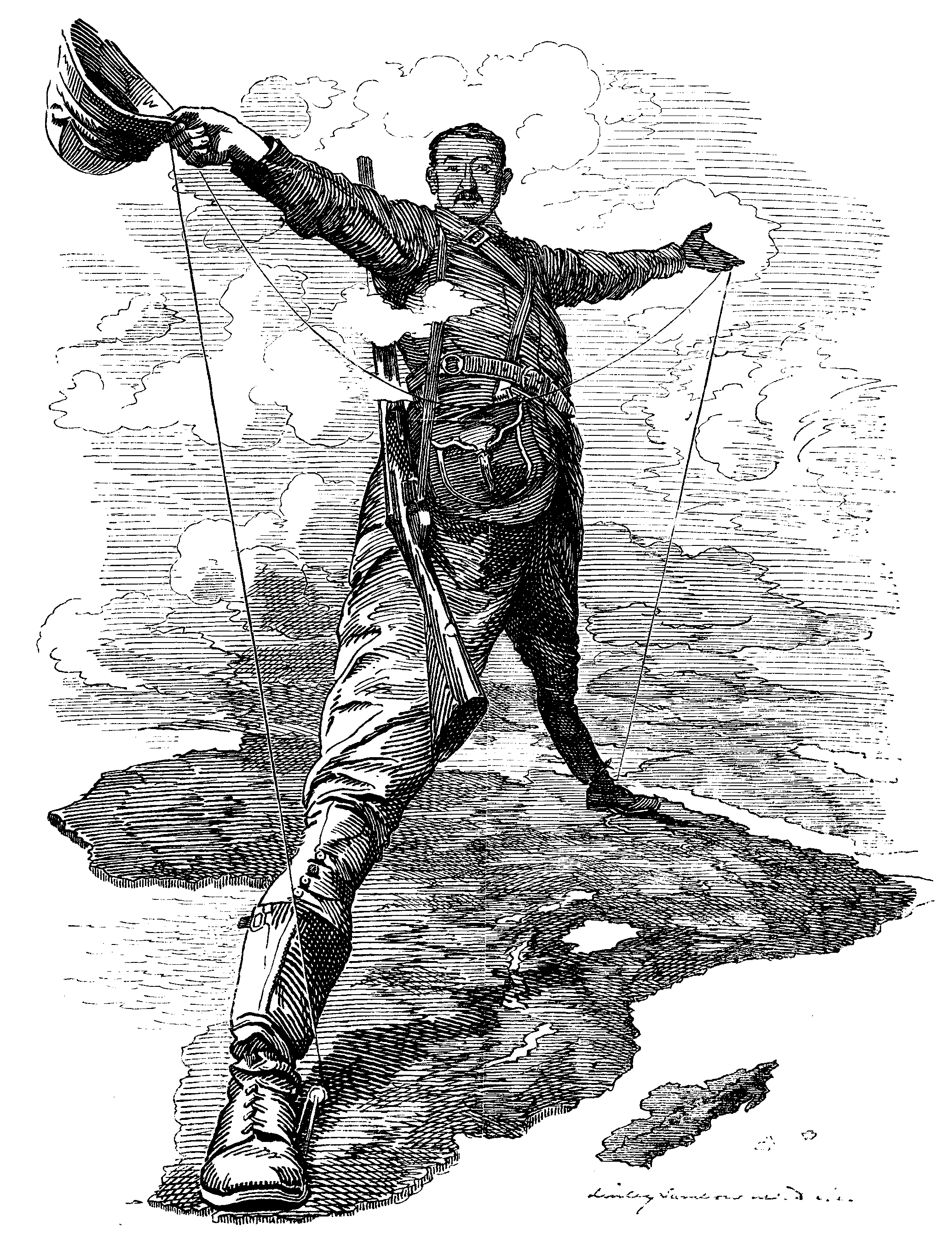
Social Darwinism, the theory that a country can either assume the role of the oppressor or the oppressed, rationalized and encouraged the European Partition of Africa. Today, this theory has been largely discredited, but its effects are still apparent. Colonization set the stage for the inequities in education, healthcare, and infrastructure that is still seen across the globe. When looking at the economic prosperity of a country, one must look to the past to understand its current state. During the early 1900s, portions of Africa were under the colonial rule of Europeans. They exploited the African people and their vast resources. Colonialism stunted Africa’s economic modernization, impacting the growth of African nations for hundreds of years.
The pivotal role that European domination played on African development has had a lasting effect on global interactions, commerce, and policy. Colonialism created the platform for a hierarchical system between continents that keeps some countries rich and some countries poor.
Colonial economic policies created an unbalanced trade that kept Africa from fully developing a domestic industry (Zouache). Economic activity in Africa prior to colonization was advanced, and many African regions engaged in international trade (Settles). Colonialists put their aspirations above the needs of the indigenous people. In an effort to generate a greater profit from their colonies, Europeans began to control more and more of the production process, driving down the prices of raw materials (Zouache). Europeans also replaced locally made goods with European goods. This forced Africa to halt the development of domestic industry, creating a gap in technological advancements (Zouache). Under colonial rule, Africa was forced to assume an export market relationship of natural resources that still exists today (Settles). Despite Africa's export market, it lost money because its imports of finished goods exceeded the price of its raw material exports (Settles). Without the economic foundation to support industry, Africa could not industrialize. Colonialism forced Africa to become a source of raw materials, labor, and a reliable consumer of European goods (Settles).
Colonial economic policies have slowed the economic modernization of Africa. With the end of colonialism, much of Africa was left with an underdeveloped economy (Settles). The majority of workers were a part of the agricultural sector of the economy and there was extensive unemployment that was passed-down from colonialism (BBC). Poor education policies and weak education levels contributed to making it nearly impossible to develop a more advanced, diverse economy (Brown). A lack of education stunted the native growth of entrepreneurship and many people remained in their colonial positions. For example, in Algeria in 1955, the upper class contained less than 15,000 people out of a population of 8,872,247 (Zouache). It was only in the 1960s that Algeria began to focus on fully industrializing its economy. That put Algeria almost two hundred years behind Britain’s industrialization (Brown).
It is no wonder that African nations have experienced a delay in their economic development and that some nations lack the features that are found in first world countries like advanced healthcare, education, and infrastructure. Prior to colonialism, African states were making steady economic progress. Colonial imposition brought this to a halt by raping the land of its resources, subjugating its people, and stripping away its domestic industry. The affected countries have had to focus their resources on recovery rather than advancements, making it difficult for them to compete in a technological, global market.
The pivotal role that European domination played on African development has had a lasting effect on global interactions, commerce, and policy. Colonialism created the platform for a hierarchical system between continents that keeps some countries rich and some countries poor.
Colonial economic policies created an unbalanced trade that kept Africa from fully developing a domestic industry (Zouache). Economic activity in Africa prior to colonization was advanced, and many African regions engaged in international trade (Settles). Colonialists put their aspirations above the needs of the indigenous people. In an effort to generate a greater profit from their colonies, Europeans began to control more and more of the production process, driving down the prices of raw materials (Zouache). Europeans also replaced locally made goods with European goods. This forced Africa to halt the development of domestic industry, creating a gap in technological advancements (Zouache). Under colonial rule, Africa was forced to assume an export market relationship of natural resources that still exists today (Settles). Despite Africa's export market, it lost money because its imports of finished goods exceeded the price of its raw material exports (Settles). Without the economic foundation to support industry, Africa could not industrialize. Colonialism forced Africa to become a source of raw materials, labor, and a reliable consumer of European goods (Settles).
Colonial economic policies have slowed the economic modernization of Africa. With the end of colonialism, much of Africa was left with an underdeveloped economy (Settles). The majority of workers were a part of the agricultural sector of the economy and there was extensive unemployment that was passed-down from colonialism (BBC). Poor education policies and weak education levels contributed to making it nearly impossible to develop a more advanced, diverse economy (Brown). A lack of education stunted the native growth of entrepreneurship and many people remained in their colonial positions. For example, in Algeria in 1955, the upper class contained less than 15,000 people out of a population of 8,872,247 (Zouache). It was only in the 1960s that Algeria began to focus on fully industrializing its economy. That put Algeria almost two hundred years behind Britain’s industrialization (Brown).
It is no wonder that African nations have experienced a delay in their economic development and that some nations lack the features that are found in first world countries like advanced healthcare, education, and infrastructure. Prior to colonialism, African states were making steady economic progress. Colonial imposition brought this to a halt by raping the land of its resources, subjugating its people, and stripping away its domestic industry. The affected countries have had to focus their resources on recovery rather than advancements, making it difficult for them to compete in a technological, global market.
Work Cited
“Algeria Profile - Overview.” BBC News, BBC, 6 May 2016,
www.bbc.com/news/world-africa-14118853.
Brown, L. Carl, and Keith Sutton. “Algeria.” Encyclopædia Britannica, Encyclopædia
Britannica, Inc., 13 Feb. 2018, www.britannica.com/place/Algeria/Economy.
Grischow, Jeff D. “Capitalism: Africa.” Gale, Student Resources, 2005.
Settles, Joshua D., and Ferlin McGaskey. “The Impact of Colonialism on African Economic
Development .”Tennessee Research and Creative Exchange, The University of Tennessee, 1996, trace.tennessee.edu/cgi/viewcontent.cgi?article=1182&context=utk_chanhonoproj.
Zouache, Abdallah. “The Economics of Algeria since Independence.” Algerije, no. Herfst 2012,
Aug. 2012, doi:http://www.imavo.be/vmt/12315-Zouache.pdf.

I liked your topic because I think it is interesting how foreign influences have created the Africa we know today. Acknowledging this fact can help correct the mistakes we've made in the past.
ReplyDeleteI also like your thought process and how you organized your article. How can countries now help Africa?
DeleteMy favorite aspect of this piece is how you advocate for Africa yet maintaining such an informative tone. My main take away is that colonialism really messed up Africa, and now I know to what extent. My question is: What other countries in different parts of the world experienced this? Does this happen to all countries to some degree?
ReplyDelete